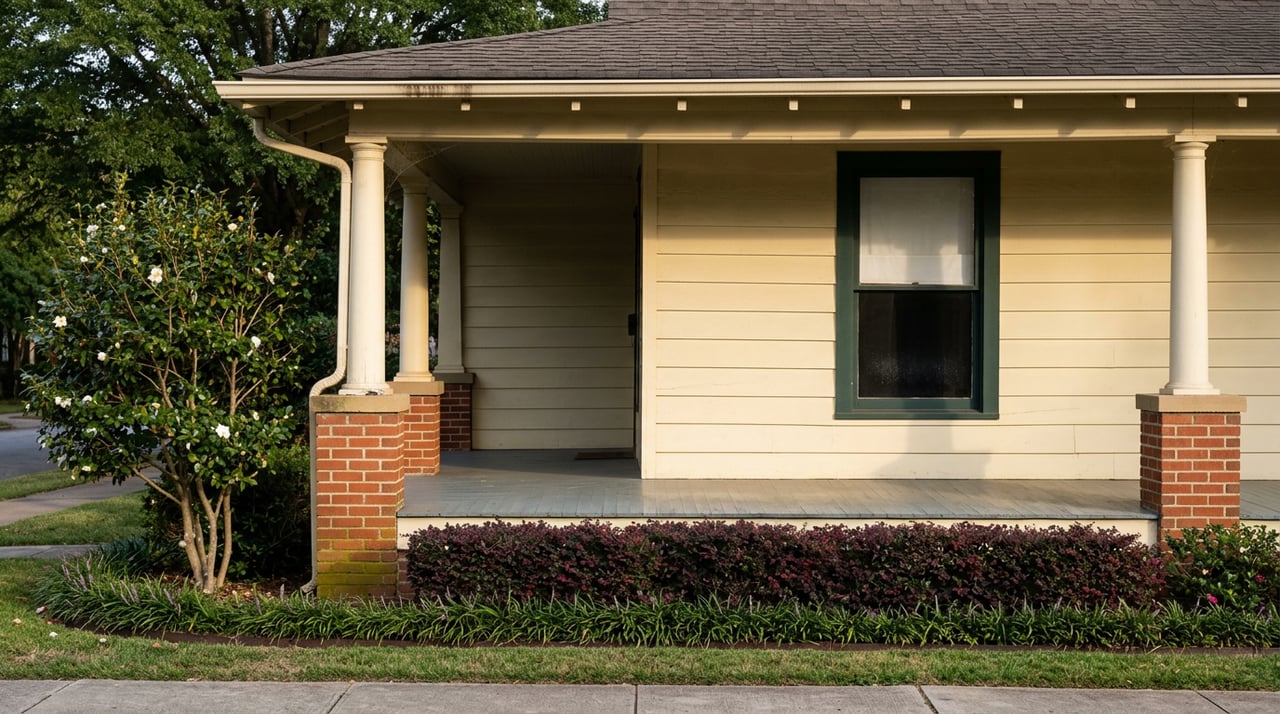
Walk Central Avenue on a Saturday morning and you'll pass a run of 1920s Craftsman bungalows with deep porches, the kind of houses where a for-sale sign might not go up again for a decade. A mile and a half south, the Rail Trail cuts past glass-fronted apartment lobbies and new townhome rows, the kind of construction that finished leasing units eighteen months ago and already has turnover. Both places get pitched to the same buyer: someone relocating to Charlotte, comparing neighborhoods, trying to figure out what their budget actually buys.
Here's the number that trips people up. As of April 2026, Plaza Midwood's median listing price sat at roughly $927,500, with a median sold price near $830,000. South End's median listing price the same month was about $610,000. On paper, that reads as "South End is the affordable option." It isn't, and the reason why matters more than the headline number itself.
The Sticker Price Isn't Measuring The Same Thing
South End's April 2026 snapshot showed just 8 homes for sale, alongside roughly 520 active rentals in the same corridor. Plaza Midwood, by contrast, had 32 homes on the market. That gap in inventory size is the whole story. When only 8 properties make up a for-sale market, the median price is being set by whichever 8 happened to list that month, not by what the neighborhood broadly costs. A single high-end penthouse or a single below-market estate sale can swing that number by tens of thousands of dollars in either direction.
Plaza Midwood's 32 listings give a steadier read because there's simply more data behind the number. And what that steadier number shows is a neighborhood where standalone, owner-occupied houses are scarce enough that buyers are bidding the median well past $900,000 for listing price, even though the finished sales land closer to $830,000.
So the comparison buyers actually want to make, older character home against newer low-maintenance construction, isn't a comparison of "expensive versus cheap." It's a comparison of two different housing products being sold into two different types of scarcity.
Why The Inventory Looks So Different Block To Block
Plaza Midwood traces back to Charlotte's streetcar-suburb era. The housing stock is genuinely old: Craftsman bungalows, some Victorian and cottage-style infill, concentrated along and around Central Avenue. That stock doesn't expand. Nobody is building new 1920s bungalows, so every one that comes up for sale is competing against a fixed, shrinking supply of buyers who specifically want that look and that walkable, independent-retail feel.
South End grew up differently. Its planning has focused on transit-oriented development, and the corridor is now filled with apartment buildings and townhomes built for a rental-first market. That's why the for-sale pool is so thin. Most of the units in South End were never built to be owner-occupied starter homes. They were built as rental product, and the small number that do come up for individual sale get absorbed fast by buyers chasing walkability to the LYNX Blue Line and the Rail Trail.
That difference in built purpose, not some baseline judgment about which neighborhood is "better," is what's actually driving the price gap.
The Number That Actually Tracks With Value
If sticker price is the wrong number to anchor on, what should a buyer actually look at? Transit proximity has the clearest track record. Over the five years leading into 2026, properties within a half mile of a LYNX Blue Line station showed 15 to 25 percentage points more appreciation than comparable homes farther from a station. That's not a small effect. It's larger than the gap between many of Charlotte's inner-ring neighborhoods as a whole.
Here's how the three most-cross-shopped inner-ring neighborhoods stack up on the traits that actually predict where your money goes over time:
| Neighborhood | Housing character | Rail access | 5-year appreciation (through early 2026) |
|---|---|---|---|
| Plaza Midwood | 1920s Craftsman bungalows, scarce owner-occupied stock | CityLYNX Gold Line streetcar (about 1.25 miles from the nearest current light rail stop) | +36% |
| South End | Newer condos, lofts, and townhomes, rental-heavy | Multiple LYNX Blue Line stations within the corridor | +41% |
| NoDa | Mill houses, townhomes, mixed vintages | CityLYNX Gold Line, walkable to Blue Line's north end | +34% |
South End's higher five-year appreciation number lines up with its stronger rail access, which supports the idea that transit proximity, not the sticker price of what little inventory exists, is the real driver of long-term value in that corridor. Plaza Midwood's appreciation is close behind despite weaker direct rail access, which tells you its scarcity of historic housing stock is doing a lot of the work on its own.
Where NoDa Fits In
NoDa sits between the two stories. Once a textile mill corridor, it's now Charlotte's arts district, with murals, galleries, and live music clustered along streets that still carry renovated mill houses alongside newer development. Price-wise it lands closer to Plaza Midwood's character-home model than South End's transit-condo model, but with slightly more accessible entry points for buyers who want walkability and personality without competing for a shrinking pool of century-old bungalows.
For a buyer comparing all three, NoDa is often the practical middle ground: less scarcity pressure than Plaza Midwood, more owner-occupied inventory than South End, and appreciation numbers close enough to both that the choice comes down to lifestyle fit rather than investment math.
What This Means If You're Shopping This Fall
A few things worth carrying into your actual search, rather than treating any single neighborhood's median as a verdict:
- Don't read a low median listing price as "more affordable." Check how many homes that median is actually based on. A market with single-digit active listings is not a reliable price signal.
- Walk the distance to the nearest Blue Line or Gold Line stop before you fall for a listing photo. That distance has a documented, multi-year relationship with appreciation that the neighborhood name alone doesn't capture.
- If you want a standalone house with a yard and some architectural history, expect to compete for scarce stock in Plaza Midwood or NoDa. If you want newer construction and don't mind a smaller for-sale pool, South End's inventory will move fast whenever it appears.
- If part of your plan includes renting the property out at some point, know that short-term rental rules in Charlotte require registration and impose zone-specific limits, which is worth factoring in before you assume a South End or Plaza Midwood purchase pencils out as an investment.
A Few Direct Questions
Is South End actually the pricier neighborhood? Not based on the April 2026 data. Plaza Midwood's median listing and sold prices both ran well above South End's that month. South End's lower median reflects a thin, rental-heavy for-sale pool, not lower underlying value.
Does living near the Blue Line guarantee my home will appreciate faster? No single factor guarantees an outcome, but the five-year data shows a meaningful and consistent gap, 15 to 25 percentage points, between comparable homes near a station and those farther away. It's one of the stronger patterns in this market, not a promise.
Should I rule out South End if I want a house instead of a condo? Not necessarily, but go in knowing the for-sale pool there is small in any given month. You may need patience, or a willingness to move quickly when the right listing appears.
None of this means one neighborhood is right and the others are wrong. It means the number on the listing page is a starting point, not a verdict, and figuring out what's actually behind it is exactly the kind of work worth doing before you write an offer.
If you're weighing Plaza Midwood, South End, NoDa, or anywhere else in the Charlotte area against a move you're already planning, Lisa Rivera and the Avalon Realty Group can walk through what your specific budget and priorities actually look like on the ground, block by block. Request Your Free Home Valuation to start the conversation.