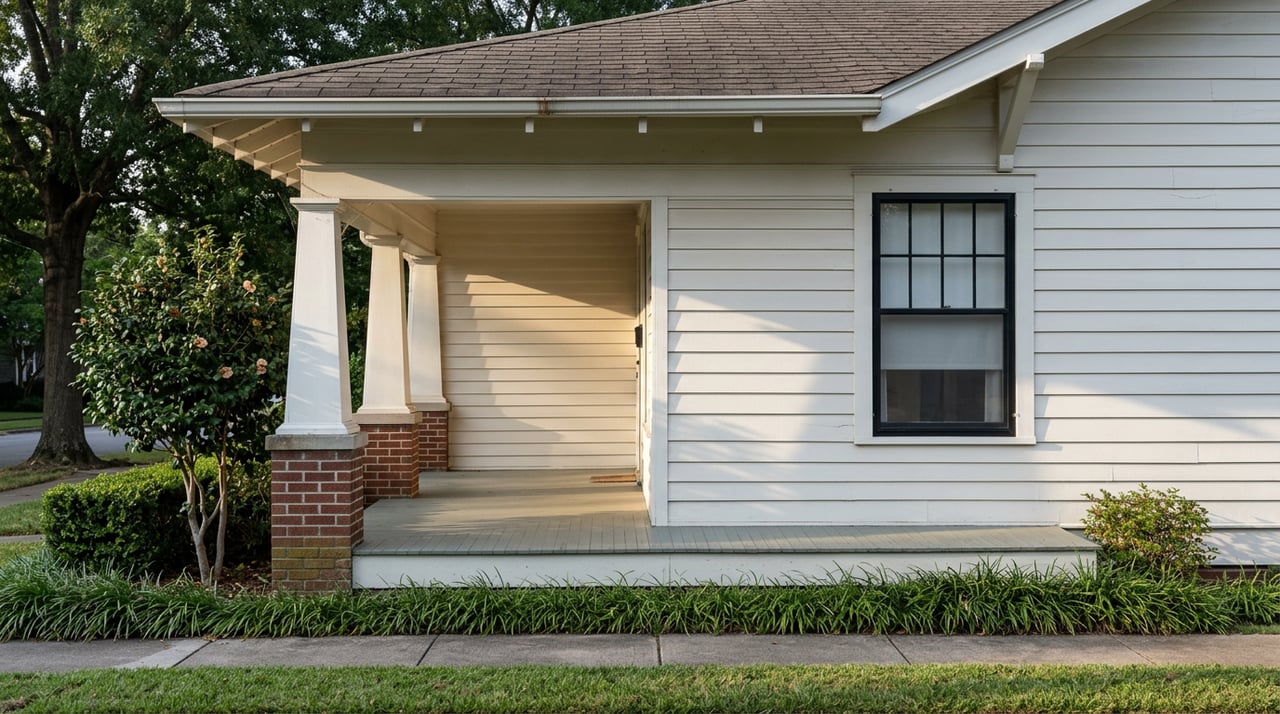
Which Greensboro neighborhood can legally stop you from painting your own front door the wrong color? It is not a trick question, and the answer surprises most buyers who assume "historic" is a single, uniform label. It isn't. Two categories of historic status exist side by side in this city, and they carry almost nothing in common beyond the word itself.
Greensboro's Historic Preservation Commission identifies Fisher Park, College Hill, and Dunleath as locally zoned historic districts. That zoning gives the city legal authority over exterior changes to your home, enforced through a Certificate of Appropriateness. Sunset Hills and Irving Park, by contrast, are listed on the National Register of Historic Places, an honor that recognizes architectural and historical significance but by itself imposes no restrictions on what an owner can do to a porch, a roofline, or a coat of paint. A buyer comparing a bungalow in one against a ranch in the other is comparing two different legal realities that happen to look similar in listing photos.
The Distinction That Changes What You Can Do to Your Own House
Local historic district designation in Greensboro means a Certificate of Appropriateness, commonly shortened to COA, must be approved before any exterior work begins. The city's own program description is direct about this: work to the exterior of buildings or property inside College Hill, Dunleath, or Fisher Park requires a COA to ensure the change meets the district's design standards. That covers everything from a new fence to a replacement window to a full addition.
National Register listing works differently. Sunset Hills and Irving Park earned that designation through the same kind of historical and architectural review, but the National Register is fundamentally a recognition program. It does not, on its own, give a city planning department the power to approve or deny your choice of siding.
Here is how the three locally zoned districts and the two National Register neighborhoods most often mentioned alongside them actually compare:
| Neighborhood | Designation Type | Exterior Work Requires City Approval? |
|---|---|---|
| Fisher Park | Locally zoned + National Register | Yes, Certificate of Appropriateness required |
| College Hill | Locally zoned + National Register | Yes, Certificate of Appropriateness required |
| Dunleath | Locally zoned + National Register | Yes, Certificate of Appropriateness required |
| Sunset Hills | National Register only | No, recognition status only |
| Irving Park | National Register only | No, recognition status only |
Notice that Fisher Park, College Hill, and Dunleath actually carry both designations at once. They earned National Register recognition and a local zoning overlay. The overlay is what does the legal work. Sunset Hills and Irving Park have the recognition without the overlay, which is why an owner there can swap out a garage door without a hearing.
What a Certificate of Appropriateness Actually Requires
If you buy in one of the three locally zoned districts, the COA process has a real calendar attached to it. According to the city's Historic Preservation Commission meeting information, the Commission meets on the last Wednesday of each month at 4:00 p.m. in the Plaza Level Conference Room of the Melvin Municipal Office Building on West Washington Street, and applications must be submitted no later than 21 days before that meeting. Miss the window and your project waits another month.
Not every change needs a full hearing. Minor work such as routine exterior repairs, landscaping, or a simple fence or deck can typically be approved by city staff without going before the Commission. Larger projects, new construction, additions, and major alterations to the building's appearance, go to the Historic Preservation Commission itself, and owners are encouraged to attend and testify on their own application's behalf.
This past September, the city adopted its first comprehensive update to the Historic District Program Manual and Design Standards since 2003. The revision applies directly to College Hill, Dunleath, and Fisher Park, and it was written to simplify language that previously required significant interpretation, with better online resources for owners who don't have a preservation architect on retainer. It also gave newer, non-original structures within these districts, the midcentury infill sitting among the 1910s Craftsman bungalows, somewhat more flexibility than a strict, one-size-fits-all reading of the old standards allowed. If your COA questions are based on how the rules worked five years ago, they may already be outdated.
The city treats compliance as something worth celebrating, not just enforcing. Its Historic Preservation Commission runs an annual recognition program each May, timed to Historic Preservation Month, and the eligibility bar is telling: a project must have already received a Certificate of Appropriateness to even be nominated. The process isn't a formality bolted onto ownership. It's baked into how the city defines a job well done.
What Inspectors Actually Find in This Housing Stock
The age that gives these neighborhoods their character also produces a predictable pattern at inspection time. Fisher Park, College Hill, and Dunleath were largely built out between the 1890s and 1930s, and much of that stock sits on pier-and-beam foundations with open, vented crawlspaces, a design that lets humid Piedmont air condense on cool surfaces underneath the house. That moisture pattern is a documented, recurring finding in this specific housing stock, distinct from the concrete-slab construction common in newer Greensboro subdivisions.
Porches deserve particular attention on a tour, not just for curb appeal but because Greensboro's historic district standards treat them as a defining architectural feature, which means porch floors, railings, columns, and steps that have deteriorated from weather exposure are both a maintenance issue and a preservation issue. A masonry home with minor settlement and hairline mortar-joint cracking is normal for its age. Large cracks running through the masonry units themselves, bulging or uneven walls, or sagging floors are a different conversation entirely, and worth a specialist's eye before you write an offer.
None of this means walk away. It means budget with your eyes open, and bring an inspector who has actually worked pre-1940 pier-and-beam construction, not just newer slab-built homes.
The Disclosure Requirements Sellers in These Three Districts Need to Know About
North Carolina's Residential Property Disclosure Act, codified as G.S. 47E, requires sellers of one-to-four unit residential property to complete the Residential Property and Owners' Association Disclosure Statement before a buyer makes an offer. The form asks sellers to answer yes, no, or no representation on a long list of conditions, and the law operates on a known-defects standard: sellers must disclose what they actually know, but the statute does not require them to hire an inspector or investigate the property to uncover problems they don't already know about.
For a home built before 1978 in Fisher Park, College Hill, or Dunleath, one part of that disclosure package isn't optional or situational. Federal law requires a Lead-Based Paint Disclosure for any home built before 1978, along with the EPA's lead-hazard pamphlet, and it gives buyers a 10-day window to conduct a lead inspection or risk assessment before the sale closes. Because these three neighborhoods were built almost entirely before that cutoff, sellers of many homes there must provide this disclosure. A separate mineral and oil and gas rights disclosure statement is also required under North Carolina law, a provision that catches out-of-state buyers off guard since it's fairly unusual outside NC.
The stakes for getting this wrong are real. Disclosure disputes do show up in front of Guilford County courts. The safest posture for a seller with an older home is the same one that protects buyers too: when in doubt, disclose, rather than lean on "no representation" for something you actually know about.
A Few Direct Questions
Does a Certificate of Appropriateness apply to interior renovations? No. The COA process governs exterior work only, visible from the street or affecting the building's public-facing character. Interior remodeling in a locally zoned district follows the same city building permit process as anywhere else in Greensboro.
If I buy in Sunset Hills or Irving Park, can I do anything I want to the exterior? Practically, yes, in the sense that no local historic zoning overlay applies. Standard city building permits and any applicable HOA rules still govern the work, but there's no Certificate of Appropriateness step tied to the National Register listing itself.
Do I need a specialist inspector for a home built before 1940? Not by law, but it's worth the extra line item. General home inspectors cover the basics well, but crawlspace moisture patterns, aging electrical systems, and masonry settlement specific to this era of construction are easier to catch with someone who has worked this housing stock before.
Buying or selling in one of Greensboro's historic districts comes with real mechanics attached to the charm, and getting the sequence right, from COA timing to disclosure obligations, is where a local team earns its keep. If you're weighing a move into Fisher Park, College Hill, Dunleath, or comparing them against a National Register neighborhood like Sunset Hills or Irving Park, Avalon Realty Group can walk the specifics with you street by street. Request Your Free Home Valuation to start the conversation with numbers built for your actual address, not a citywide average.
This article is general information, not legal, tax or financial advice. Consult a qualified professional about your situation.